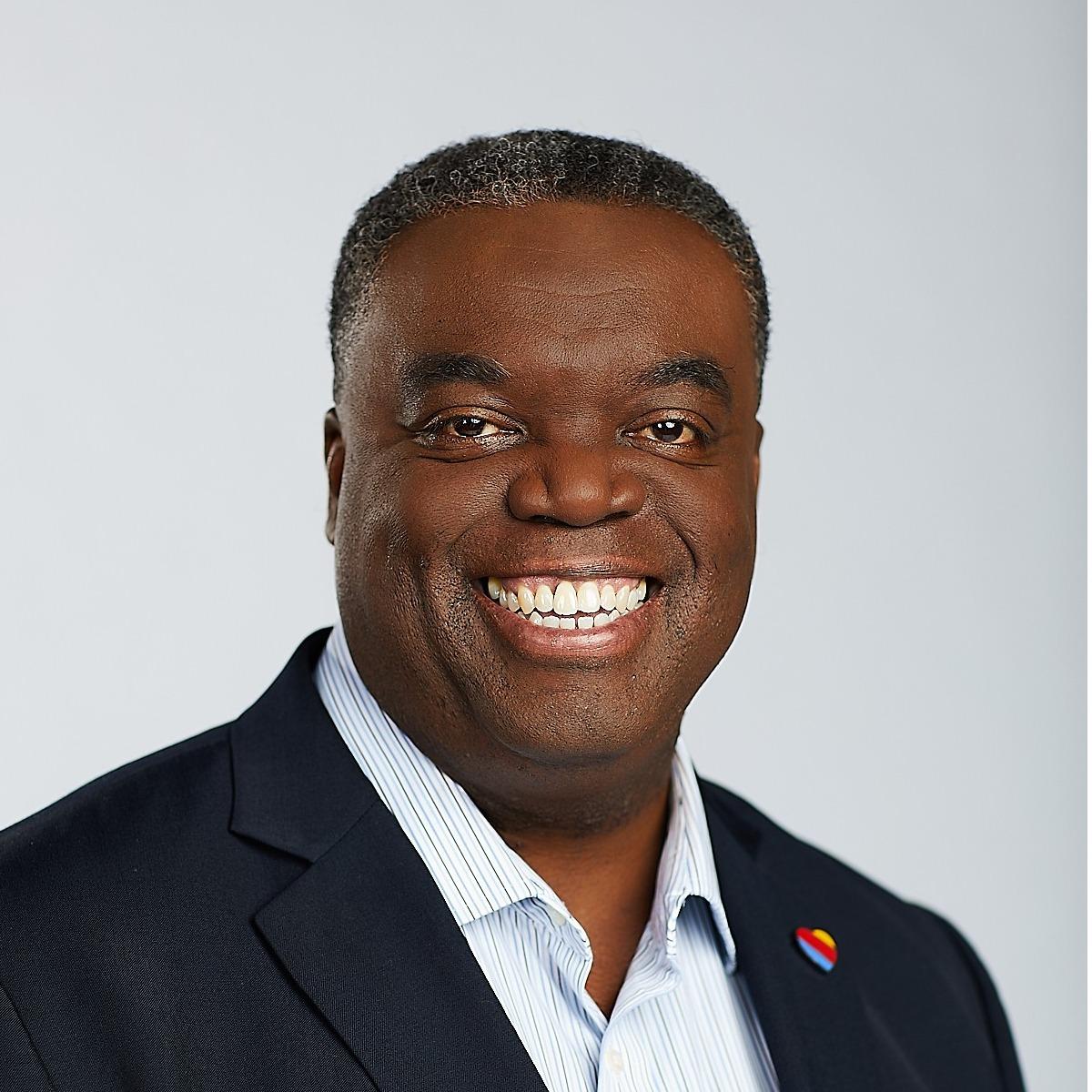
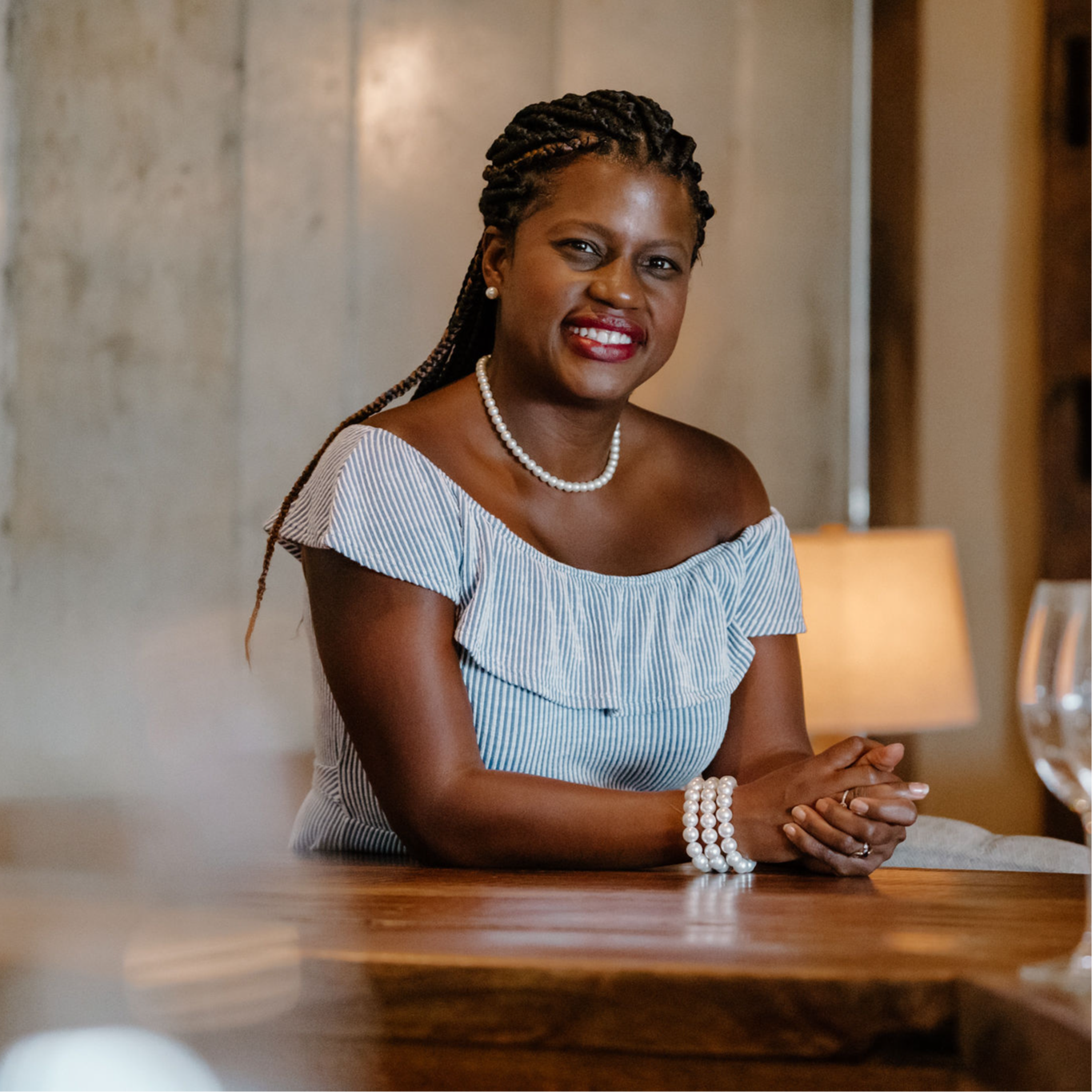
Maya: Well, well, well, hello everyone. As the proud Chief People and Culture Officer, I am too excited to talk about people and culture.
And our keynote speaker, Dan Janke, he mentioned people and culture quite a bit in his in his talk. And we can't ignore the broader environment that our teams are living and working in. So let's talk candidly about how leaders navigate this.
Rob: I'm excited.
Maya: All right? Good. I'm glad you're excited. So to kick things off, you have had an impressive career at Southwest for nearly 30 years, so I assume you started when you were 10.
Rob: Yeah, I know I don't look that old, but I am that old.
Maya: While you haven't worked in the DEI division, how has diversity, equity and inclusion of people been linked into your various positions at Southwest?
Rob: Yeah. So thank you, Maya, for the question. As you mentioned, I've been with Southwest almost 30 years. And throughout my career, I've had a number of roles, starting as an Area Marketing Manager way back in the 90s for those that are old enough to remember the 90s and having various roles all the way up to my current role of Managing Director of B2B strategy as part of our Southwest business team.
But in that tenure, one of my roles was overseeing all of our, what we called at the time, multicultural marketing efforts for different segments in the community, African American and Hispanic communities.
And really the objective there was to ensure that as we grew as an airline and into new cities across the system, ensuring that we were endearing our brand to all customers, business customers, leisure customers, general market customers and then those in the segments of the African American and Hispanic communities.
We wanted to ensure that we endeared ourselves to those markets to really get those travelers to fly Southwest Airlines and think of Southwest Airlines when they flew, regardless of whether it was for business or pleasure or whatever.
So while I've not necessarily been directly involved in any DEI efforts at Southwest, I've always felt that as an African American man, I've always sort of led just with that spirit of coming from a different culture to bring a different perspective and view to how I lead people and how I go about my day-to-day. But in the roles that I've had, I've had the opportunity to market to different segments and ensure that we are enduring our brand to those travelers for all of their travel needs.
Maya: That's awesome. I remember studying about Southwest when I was in Graduate School, which was in the 90s. My children refer to it as the late 1900s to make me feel…
Rob: Kids these days.
Maya: I know, right? So we're in a moment where DEI in the United States has become politically polarized, and some companies are pulling back, others are really doubling down. So how do you lead every day through that tension?
Rob: Yeah. On one of the walls in our headquarters is a quote from our President and Emeritus, Colleen Barrett. And it's the golden rule. "Treat others the way that you want to be treated by others." And that's something that growing up in my Southwest years, that's just something that we've always lived by. It was ensuring that you treat people the way you want to be treated. And that's not just a quote. It's a standard at Southwest and it has helped to not only navigate conversations that we have with our internal customers, our cohorts, but also with our external customers. And I think by leading with that lens, it enables you to really kind of take a step back and say regardless of what the matter is that we're discussing, regardless of the environment around us.
If I focus on finding a common ground with you and we take the position of I'm going to treat you with respect and expect you to treat me with respect in return, you'll usually get to a solid answer. It doesn't mean that one side wins versus the other, but you're able to come together and collaborate on a solution that you can both move forward with.
So I think that mindset and that model is, which is something that I've again grown up with in Southwest Airlines I've always used that as sort of my lens to how I'm leading day-to-day, how I'm interacting with people both internally and externally.
Maya: That's wonderful. Southwest has always been known to, or at least have the impression that they take care of their people, and so I love the tenets around respect and valuing one another. If you strip away the labels, if you don't talk about DEI or ESG or culture, what fundamental leadership principles should never change?
Rob: Yeah, I think I first would lean back on the golden rule, treating people the way you want to be treated. But you know, another founding principle at Southwest is that we hire for attitude and we train for skill. And what that means is when we are going through our interview with potential employees, the goal there is to ensure that their values align with the values of Southwest Airlines.
There's a couple of firsts that I always like to point out that Southwest has achieved over its more than 55 year history. One is we were the first US major carrier to hire a female president that was in 2001, Colleen Barrett. We were also the first US major carrier to hire an African American chief pilot, that's Lou Freeman. That was in 1992.
I bring up the years intentionally to show that we've never been governed by any external directives or anything like that about who we should hire and why we should hire them.
We've always relied on and leaned on hiring for attitude, training for skill, allowing those employees to be their authentic selves every day, and promoting them and rewarding them for the things that they were able to deliver on a day-to-day basis. And Colleen and Lou, I knew both of them personally and you know, you saw the excellence in everything that they did on a day-to-day basis. So it wasn't necessarily about directives or doubling down. This is way before any of this really became politically polarizing, but it was just Southwest being Southwest, doing what we do best, hiring the right people and providing them with opportunities to grow.
Maya: So you would say you haven't seen any change in our cultural experience, whether pulling back or doubling down, just been consistent since you've been with the company?
Rob: We've always been consistent from day one. From the day I started in 1993 to where I am today, we've always been consistent about those founding principles of hiring the right people, and allowing them to be their authentic selves, and rewarding them with growth as they deliver results.
Maya: That's awesome. When you mentioned earlier about hiring for attitude, can you tell us more about that? What do you mean by attitude?
Rob: Yeah. Again, I think it's more or less just we've got founding principles as a company to be inclusive, to be fun and to be really respectful of those that we are working with and we're building relationships with. So the questions that we typically ask in an interview are aligned around those values. Give us a time when you've had to handle the situation that was maybe uncomfortable for you. What approach did you take? And it gives you just insight into the thought process with that potential employee and whether or not they are aligned with the values of the company. It doesn't mean that we get it 100% right, but I think over the course of our 55-year history, we've gotten it right way more than we've gotten it wrong.
Maya: That's fantastic. In HR, we call that behavioral interviewing.
Rob: Got it.
Maya: Yeah. That's awesome. As the airline industry accelerates toward modern retailing and the prevalence of AI is part of our everyday in virtually every workplace, how can leaders ensure culture scales alongside innovation?
Rob: Yeah. The shiny new object that's got everyone's attention,
AI. I'm excited about all of the potential innovation and scaling that AI can add to our day-to-day lives, particularly in the area where I am in Southwest Airlines. From a distribution standpoint, I think there's a lot of opportunity that AI will have to allow us to really diversify how we go to market with our channel strategy. So I'm excited about all of the great innovation that AI will hopefully open the doors for. But it's Southwest.
Our people has always been our number one competitive advantage. You can match our fares, you can match the aircraft, but it's our people that allow us to stand out and be different and be better. So the one thing, and we've got a pillar that is dedicated now to AI and innovation. So I'm excited to see all of the new things that they bring forward through their direction.
But the one thing that I'm hoping for that we do is not necessarily look for AI to replace our people because again, our people is that they're building the relationships in ways that technology can't do. They're the ones that are driving our culture in ways that technology can't.
But hopefully what our team will do is allow AI to enable our people to do their jobs even better. Sure, we want to leverage the technology to reduce cost, and maybe that's in future cost of maybe hiring less people or hiring in different ways. But I would love to see that technology used alongside our people in ways that enable them to do their jobs even better.
Maya: That's fantastic. Do you sense any fear from your team members or are they embracing AI?
Rob: Well, I think when everything in the media is saying AI is going to take over this and take over that in the future of course, it has some on the edge of their seats and a little concerned about what the future may hold. But again, I have to go back to who we are fundamentally as a company and it's all about our people. So hopefully, while there are fears out there about the future of AI and how it can maybe take over different people's jobs in the future. Hopefully we can rest on again just the foundation of who we are as a company and always putting our people first.
You mentioned earlier about just our history and how we treat our employees. We have a saying: if you treat your employees well, they'll treat your customers well, and if you treat your customers well, they'll make sure that the shareholders are taken care of. That's a founding principle and something that we talk about every day at Southwest Airlines. So hopefully any fears that anyone has as an employee can rest on who we are as a company.
Maya: I love that. One of my leadership mantras is if you take care of your people, they will take care of the company or they will take care of customers. So that's fantastic. Rob, what's one practical action every person in this room can take today to strengthen their culture and support their diverse teams, whether they are a direct leader or not?
Rob: Yeah, I don't know that I could probably focus on one. Maybe a couple things that I would say is leaders should lead the way. I have a saying that I borrowed from my pastor at church, speed of the leader, speed of the team.
So if the leader is establishing what culture should look like and establishing what the rhythm of your team should look like, everyone should follow and everyone should be aligned. So I think leaders need to lead the way and be examples of what they want culture to look like in their organizations and within their teams.
And then I'd say invest in your people and empower them to be the brand ambassadors of the culture that you have sort of established. I think it's important that we continue to invest in our people and allow them to continue to grow in the ways that they want to grow so that they feel invested in the outcomes that you're trying to accomplish as a team. So I'd say let leaders lead the way, speed of the leaders, speed of the team, and invest in your people and empower them to do the jobs that you've hired them to do.
Maya: That's awesome, I hope you all wrote that down. I don't see anybody typing it. Whose leadership within this industry inspires you?
Rob: I mean, there's a lot of people that I could point to. The one that I'll sort of zero in on is our Emeritus CEO, Herb Kelleher, who led Southwest for many years, was part of the founding member of Southwest Airlines. And I was very fortunate in my early years to not only get to know Herb and meet him but be in meetings with him and just sort of glean from him how he led as a CEO.
Someone at that level that's involved in so many different things had a knack for being able to not only meet you, know your name, and get to know something unique about you, but the next time you saw him, whether it was the next week or the next year, he remembered your name, and he remembered that unique thing that he sort of learned about you.
But just from an airline perspective, when you think about the impact that he had as a leader and CEO in a volatile industry like the airline industry, and to be able to focus on people and culture, he was truly. It starts at the top.
He was certainly the ringleader when it comes to culture. And a lot of people think culture just is fun, or they may think about the Halloween celebrations that we have at our headquarters. But culture is more than that. It's about relationships that you build with your people. And he was a prime example of what it means to be at the top, but also be ingrained in frontline employees and understanding what was important to all of us, which is our culture and our people.
Maya: Love that. Thank you so much, Rob.
Rob: Thank you.
Maya: You and I are keeping these folks from breaks. I think we got to get off the stage.
Rob: Let's get off the stage.
Maya: Thank you so much for your time.
Rob: Thank you, Maya.
Maya: Thank you.
Rob: Thank you.