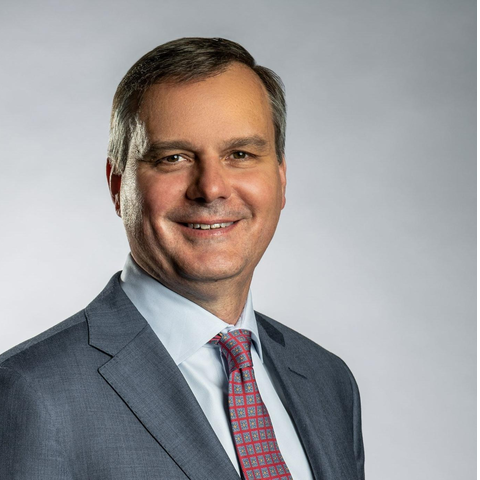
Brett: Alright. Well, now it is my pleasure, I'll stay on stage, it's my pleasure to welcome Dan Janki to our Elevate stage.
Dan recently took on the role of Chief Operating Officer at Delta Air Lines, and he's here today to share with us a fresh take on leadership on innovation and what it takes to keep evolving in our rapidly changing industry.
So, thank you to Dan.
Dan: Pleasure to be here.
Brett: Alright, well, thank you for coming. Thank you for making the time this morning to join us on stage. Really excited to meet you.
Dan: Yeah, it's great to be here, great to be with the team, great to be in the hometown of Atlanta. Hopefully many of you traveled, if not all of you traveled in, on Delta and we took good care of you and the teams for good care of you.
Brett: Yeah, well, and really exciting times for Atlanta. That game last night with the Knicks was, yes, absolutely amazing.
But congratulations on your new role as well. I know that going from CFO to COO is not trivial. I'm curious, as you move into this new role, you're now overseeing a lot more systems, the processes that run the airline, and also the teams that actually bring that strategy to life. And, so, that must mean that you're spending time differently.
Dan: Yes.
Brett: Can you share a little bit of what you're doing differently now?
Dan: No doubt. I would say just in general after spending almost 30 years in financial services and maybe longer cycle industrial businesses, spending the last five years in aviation, you realize the high velocity nature of the business both commercially and operationally. You were talking a lot about that in the opening.
So, for me just coming into it, you realize how important data is, technology, from a customer perspective, from the commercial team perspective, the operating teams along with the financial teams, along with your employees.
And how do you spend time on that?
So, certainly going into the operational role, I saw a lot of it, financially, across the company, but it's digging in to make sure that I understand that connection in regards to what our employees see, what the customer sees, and how do we then best support and set our people up to win the day, to win the week, to win the month, as it relates to that.
Part of that is my own education. I actually have the team doing a whole work for me just on our operational data white paper. Like give me the history of it, how we've evolved it over time, how that architecture has evolved over time, and lay out to me what they feel is our North Star for the next three to five years. And how did we get there and understanding that so that I know where we're going and how that supports the journey and strategy of the company.
Brett: Yeah, it makes sense. And there's a tremendous amount of data on the operational side. When I worked on that side of the industry, what I like to say was, "Literally swimming in data." And the question is, how do you make the most of it, right, to benefit your operation?
Dan: We say that, how do you turn it into information? And I know there's a lot of discussion, even around and you brought up AI at the end, and we don't always talk about AI as artificial intelligence in the leadership team we talk about it as augmented intelligence.
And how do we ensure that we take data, turn it into information, turn it into intelligence that better not only inform our customers, but really inform our employees and set them up for success every day?
Brett: Right, right. Well, Delta obviously operates at a global scale, largest airline in the world on many measures. That also comes with a need to think about how you balance kind of flexibility also with standards adoption and Delta has, especially in recent history, kind of staked out a unique approach to that. And, so, how do you think about adopting common standard and shared industry foundations to enable your global scale?
Dan: You have this actually on multiple levels, right? Because a lot of times people generally feel like if you control the information or the data, you kind of have the power.
So, it's not only industry wide, it's actually within your company. And historically we created... most of our architecture was more built around operating groups. Whether it's on the commercial side between network and revenue management, inventory management are on the operating side, whether it's the airports versus the aircraft information, the crew information.
So, even inside your own walls, you have this element where people want to kind of control the data and what we always talk about is, no, you want to bring standards to it. You want to have one view of the crew, one view of the aircraft, one view of the flight, that then you can transpond out and that unlocks everybody having the same information and everybody's staying in sync and acting off of that information versus who really controls it. It's really about... and when you do that, you build, it’s hard, right?
You have to build that trust in everybody. But if you build that trust, then you start to empower. If you start to empower, the speed of your decision making, execution increases.
So, you have to do that within your own team and company, but that's our opportunity as an industry... is, we really don't compete on data. It’s what you go do with it.
And, so, the technology platforms and the data, how do we... these standards aren't, it's not like compliance, right, related to it? It's really unlocking trust, empowerment, speed, flexibility, and having groups like yourselves and others help us move to that. I mean, we're all doing it within our own operations. I think everybody that's a part of the team has that. You always wish you woke up and everybody in your company saw the same information at the same time and could be informed. That's where you want to be. The beauty is the technology is catching up, right? And the data technology is evolving really fast here, where you don't have to rebuild all the systems.
Before, two decades ago, you'd have to design an ERP and set the data structure and all this stuff and generate it. Now, you can take very fragmented systems, but do a lot with the data layer and the structural layer. So, it's really powerful.
Brett: I think that is a really powerful point. And I love the analogy between even within a company, it's important that we have a shared understanding of what the data means. And certainly Delta is leading us into that future.
Dan: This industry... and I was talking friend, earlier this morning over coffee outside. We were talking about how it is the ultimate team sport. And it's not only the ultimate team sport inside your company, but it's also as an industry. This industry is incredibly collegiate and it's the one thing that I've always admired about it.
In my tenor before here, we had an engine business. I never had the opportunity to work in it, but those colleagues were just... had such a collegiate nature. And it's the only industry that in the morning and afternoon...You and I were talking about it... You could be a customer, you could be a partner, you could be a supplier, or you could be a competitor, all in the same meeting.
So, I think that's our opportunity.
Brett: Yeah.So unique.
Dan: Yeah.
Brett: Well, ATPCO is frequently kind of surveying the market to understand market trends and one of the surveys that we run is a flight shopper survey. We ask questions like "what's important to you when you’re considering an airline offer"?
And our most recent survey found that 70% of travelers say that more than just the price, it's important to understand what is in the offer itself. So, beyond just price, it's important to be to understand what the offer is.
Recognizing that your operating strategy, and really your success as an airline, is tied up in your ability to really meet those customers' expectations and provide offers that are relevant, how do you view your role, or your new role as a COO, in relation to Delta's retailing strategy?
Dan: They're pretty connected, right? We've been on a well over a decade journey of segmenting more or offering in a way that we meet our customers in the product that they want, in the channel that they want.
We want to support all channels, we want to support where or how our customers want to transact with us, and give them the product that they most value.
But to your point, they have to have trust in that product that they know when they not only buy it, the value that they believe that they're getting, it actually gets delivered. And that's the operating side of it, which is... it’s one thing to retail, it's another thing to deliver it.
And even one of our big learnings over time was: Sometimes our front ends move faster than our operating side. And we now have a saying you don't sell something if you can't service it with the same philosophy. It's great that you can bring the value in retailing, but if your customer care teams and your airport teams and others can't serve it that way or your partners can’t serve it... If you're kind of going across partners, then you got to get those things in sync. Because that's the trust that you're creating.
Someone may trust it at the checkout, but if they get through their travel experience, if it's not reinforced... If that value versus price that you're delivering on, that experience that they purchase and value so much, if you can't deliver on it, you're going to erode that trust, that loyalty of that customer that you work so hard to build over time.
Brett: Right. Yep, absolutely.
Well, Delta just emerged from a really busy first quarter with a lot of changes and unpredictability in the world. Airlines are no stranger to disruption either. And so how do you... as all of these changes, as all of these headwinds, hit the airline, how do you keep your teams, your employees engaged and involved during these unprecedented times?
Dan: The one thing I've learned about it is, a little bit how we talked about, there’s a certain amount of velocity that comes with it. You can expect things... the unexpected to happen almost every year.
And I think one of the things that I've learned to really admire about Delta and our team is... And we talk a lot... I was with our employees out, we do 15 frontline events where we talk about the company’s strategy and where we're going in priorities. It’s kind of a water cooler of how do you bring 500 people together 15 different times a year to continue their understanding of the company?
And we always stay true to the strategy and even in uncertainties.
You wake up to Venezuela, you go into the Middle East, you have TSA shutdowns. You got to know what's... you can't get knocked off your strategy or your priorities. So, yes, you have to tack as a sailboat would for that change of landscape. But you got to know your North Star. And we always angle around five superpowers in the company that we talk about, our core competencies.
One, it's the people and culture. We’re always going to stay the course. They’re the most important competitive advantage we have. We don't believe others can replicate.
Then, you’re always are trying to make progress as it relates to your operational reliability. You have to deliver for your customers.
Third is you want to take people to where they want to go. So, continue expanding network and your partner structure.
And then third is that trusted brand, that loyalty. How do you get people to choose you more frequently and come back to you and build a deeper ecosystem and trusted brand? That's Sky Miles, Amex.
And then, ultimately, a strong financial foundation.
And if you always use those as your elements, nonmatter what the environment is, you have a middle. You stay true to that. You have to adjust the tactics, maybe pricing, maybe capacity given the dynamics going on with fuel and other factors, but stay true those medium long-term. You can continue to differentiate, and build a stronger enterprise over time.
Brett: Right. I like that a lot. And you know it is easy to get knocked off your game if you don't have a commitment to your strategy. And, so, being able to demonstrate that, I admire how you approach that with your employees, giving them a chance to engage it, but also you get to reinforce that every time you do it, which only strengthens your ability to execute it.
Dan: Yeah. So, we always tell our teams: "Control what you can control," right, within that framework. And for our employees, our frontline, it's the care that they provide. It’s those impactful behaviors.
We know not everything's going to go well every day. We're not always going to operate on a day like today, blue skies, we're going to have disruptions. And it's really our people at that moment in time that really can differentiate. And we talk about those impactful behaviors and how do you stay true to your people over these times, but those core principles.
Brett: Right. Good. Well, you're also stepping into your role at a time of significant disruption in the Middle East and as Delta has responded to that, obviously there's the short term actions that you take, but do you have a perspective on whether Delta believes this is something enduring that will change the way that you approach execution or something that's more short-term?
Dan: I'd say it's probably a little bit of balance of both. I think there's short-term pressures that are created and and adjustments that you have to make. I don't know that if you have more enduring or different, but I think there's long-term kind of structural changes going on in the industry. And my feeling is these types of environments only accelerate those changes. And, so, you'll see just structural elements get accelerated.
Maybe things that would have taken a year, or two, or three, may manifest themselves in 9 or 12 months because of the dynamics going on. It will shake out.
I think in these periods of time the strong tend to get stronger and weak tend to get weaker. And those are moving anyhow that way. But they'll only move at accelerated pace through these periods.
Brett: Yeah, that makes sense. Well, maybe with that kind of topic a little bit in mind, if there is one thing that you could change about our industry or improve or accentuate, is there something that comes to mind?
Dan: I think, it was a little bit in your opening, I think it's not so much change but accelerate. As you think about... this industry has always been known as we don't compete on safety.
Brett: Right.
Dan: And we share like crazy with safety standards, SMF, whatever it is, you just... it's all hands, right, from every incident that happens, from every near miss. It's how do you share as an industry?
And I truly, one of the things I'm most excited about it, is the next phase of data and technology change that we're on. I think it's one that has the opportunity to unlock the greatest potential that we've probably seen in our business careers as it relates to... we all love our phones and data and all these other things thing we never knew that we needed.
But I think a whole wave of just taking friction out of travel, right? And, so, I think the foundation of that is exactly the theme of this. It's how do we accelerate the data standards? And the pipes of how we interact? Because we really aren't competing on that. It's really what we go do with that that's really the so-called difference in every company and whether it's your distribution partners, your global partners, your other parts of the ecosystem...I think the more that we can sync that up, the faster we can get to a place where we can take the friction out for customers. and our employees. And just all operate more effectively.
Brett: Yeah, I look forward to that. Sounds good. Well, reading the headlines, it would be easy to become a little bit deflated about what's going on in the world today. And yet, we have this amazing industry that really serves to connect people. And, so, what are you most optimistic about the future, where we're headed?
Dan: Yeah, there's no doubt in today's world... you don't have to hunt very far to find decisiveness, right? And people not willing to engage in constructive dialogue and other elements in so many different facets.
But to me, growing up, I grew up in a small town east of Cleveland in Ohio, maybe 1500 people. Wasn’t that diverse at all. Didn't come from that diverse of background.
I didn't have the opportunity to actually engage in air travel until my junior, my college year, going into my senior year for actually a trip. I grew up in Ohio, so Columbus to Atlanta of all places now here.
But the reason I say that is through my time, the experiences that I have in travel have been... professional world unlocked my development as a person. I got thrown into a role in Asia. I had never been to Asia. Living in Hong Kong, going to China, going to Japan, Thailand, Vietnam. And I was amazed at every time I went the culture they'd want to engage you, they want to teach you, and you to learn from them. And that human connection is so valuable. That’s when you get to... we all love that.
We love that connection with people. And, for me, travel is the ultimate experience. And we talk about it a lot in Delta in that the fact that only one in five people in the world have had the opportunity to experience air travel. So, that foundationally... it's a growth business. It’s our opportunity to connect. And the more that we connect, give them those travel experiences, bring people together for that human connection, I think it's, ultimately, really good for society. So, for me, that's what I'm most optimistic about when I think 5, 10, 15 years, it's how do we continue to unlock that opportunity?
But to do it, you've got to make it more accessible, more affordable, all the different elements that we work so hard on every day and take the fear. Some of that barrier on travel is just the fear of it, right? And we got to take the friction, comfort, trust, all the things that we talked about.
Brett: Yeah, absolutely. I love that. And that is what brings me to work every day as well, is just being inspired by travel and the opportunities that has to bring us together. So, I really appreciate you taking the time to visit with us today and really appreciate your willingness to share some of your experiences and the experiences of Delta.
Dan: Thank you for having me. Going through the agenda, your line up over this time, it’s just, it's great to have partners like this that create these environments that allow our teams to dialogue and discuss and move forward. So, I appreciated my time. Thank you.
Brett: Absolutely. Thank you very much.