Chris: I will say I am impressed by the number of people I see in the room on day two. Thank you very much for the investment in your time the past couple days. Raise your hand if you enjoyed the event last night at the Delta Museum. Outstanding, yeah, outstanding venue.
Before we jump into the content for the day, I want to just take one minute to thank Angela Sultana and Megan Humphries for helping put that event on, put this whole event on, but threw a great party. A lot of hard work goes unseen, but thank you very much to the ATPCO Marketing team for everything they've done.
So, throughout the course of the morning, we've got a few general sessions left for you. We're going to talk a little bit about dynamic offers.
You're going to hear a little bit about what's coming up in airline tech.
You'll hear more about agentic AI... can't have a conference without that.
And then there's going to be some great discussions about the ATPCO Routehappy product and how it's transforming airline merchandising.
But first, we're going to have a quick fireside chat with a former airline distribution colleague of mine. It's always good to see former airline distribution people go on to the good things.
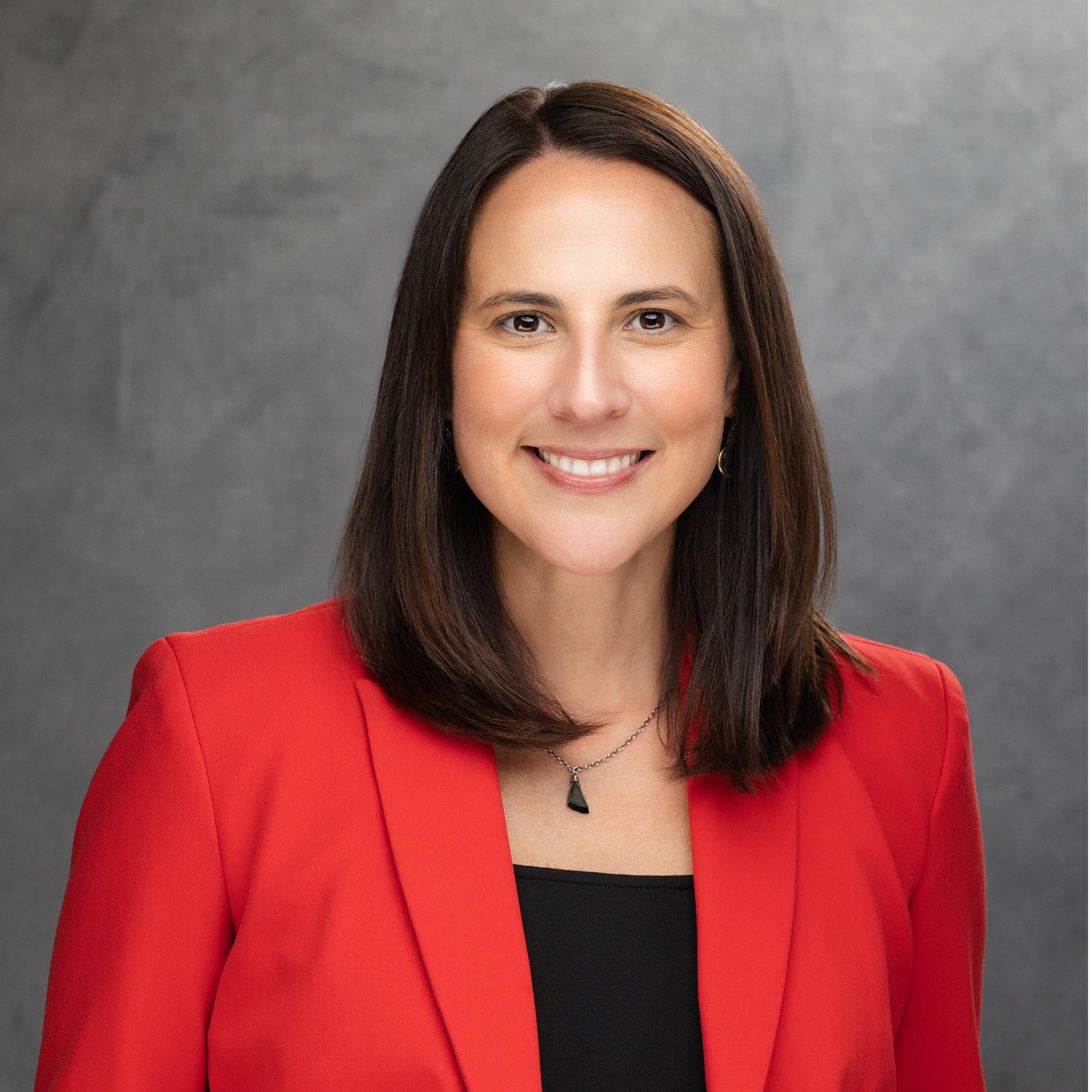
So, I am very honored to welcome to the stage Brigit Zimmerman, the CEO of Priceline.
Alright. Thank you very much, Brigitt. We greatly appreciate you spending some time with us this week.
Brigit: So happy to be here. Hello everyone, hi.
Chris: It's a different dynamic for us. We're used to sitting on the other side of the table negotiating some very interesting topics. But we'll make it a little bit easier today.
Brigit: Thank goodness. Those were tough days.
Chris: So, you've been the CEO now for four, five months now?
Brigit: Four months.
Chris: Four months. Lots happened in the industry since you you've taken over. In some ways, the industry is a little bit of an inflection point. I'd love to hear from you, especially in your new role, about what you think defines this new era of travel retailing, especially in light of the things that we've talked about the last day and a half.
Brigit: I think that we are absolutely at an inflection point and it's such an exciting time to be sitting in my seat, but really to be in travel more generally. I think we are at the point where a lot of the things that we've been talking about over the last what, 15 years? NDC, the capability to see more than just the base price, the capability to really merchandise products... Like that's here.
So, technology is kind of finally caught up with where our ambitions have been over the course of the last 15 years, but what's really exciting now, and I'm going to say it early, is generative AI.
So, I think we're going into the next phase of what technology can do for us in terms of how we talk about the offers and the orders, how we show rich content, how we help consumers understand what it is that they're buying.
Brett yesterday said, "You know the shopping part's really easy and the technology underneath is really tricky." I would argue that shopping is still really hard for a lot of customers. I think we're all doing our best to try and really show the difference between what one airline is offering versus another. But it's still not perfectly easy and I think we've got a great opportunity with new technology, with generative AI, with agentic AI to try and help make that shopping process a lot easier, cleaner for customers to help them really understand what they're buying and hopefully what they're buying then connects with the experience that they're actually having in the airport. And so really thrilled about where we're going and really exciting time to be in technology.
Chris: On the AI topic, I've heard you describe AI as the new UI, so can you tell us a little bit about what you think that means for how travelers shop and book for travel and how airlines can better represent themselves?
Brigit: Listen, I don't remember saying that, but I'm going to trust you that I actually said that. But I do think that it is something that a lot of people are saying, whether it's in travel or in other parts of the industry, and I really do believe it.
So, what it means to me, I think we as OTAs haven't historically really been great, honestly, at the inspiration and discovery part of travel. So, this capability with generative AI, with agentic AI gives us the opportunity, I think, to bridge discovery and inspiration with the searching and the booking process.
And so, within what we're doing at Priceline, we've been spending the last couple of years really playing around with new technology and trying to understand what consumers want to do with it.
So, we have this... what started out as a chatbot. She's called Penny. But we started with Penny. Putting her in places in the product experience to help consumers transact, to feel more comfortable with what it is they're buying.
So, she started in checkout and in that last moment before you're going to hit book, if you have any questions she can answer them. We then put her in the post booking experience. And so as customers have disruption or they want to change their flight, she's able to do that without necessarily a customer having to pick up and call an agent. Then, we moved her up funnel and now she answers more questions and kind of the latest and greatest thing is she's conversational. And so not only is she kind of answering the basic questions you might have, but we're starting to see customers interact with her and say things like, "Hey, I want to go to Europe in June. Where should I go?"
And so that's like the inspiration and the discovery phase that historically I don't think we've been so great at and, so, now we see more of what a consumer wants, I think, end-to-end from discovery, inspiration all the way through to post booking. And, so, then as I think about what that means for our airline partnerships and how we operate in this space, I think it means that data has to be right, accurate, easy to understand, structured in a way that we can read it, the machines can read it, the LLMS can read it, and it has to be available kind of end-to-end. Much earlier in the process, offers have to be ready earlier in the process, we need to know what's in the offer.
So, when we're asked by a customer for inspiration or new information, we have that data from our partners to be able to respond in a way that's consistent with what our partners want and what our customers expect.
Chris: In this new environment of AI-based shopping, are you seeing that consumers are becoming more brand agnostic when they're shopping in a different way than they have in the past?
Brigit: I would love your perspective on this as well, but, my two cents, I don't know that AI is pushing the change for consumers to be less brand loyal or more brand agnostic. I don't know if we have enough data yet to say that AI is driving that change.
We do see it in our data, especially the younger demographics, you know, millennials may be on the edge of being old, but kind of millennial and below we do see a little bit of a shift where consumers are perhaps behaving in some ways you might consider is less brand loyal, but I don't... I think it's just a change in what their expectations are.
We see a lot of consumers who are traveling for events. Like they're going in the moment, there's an experience they want to have, and they're making choices and trade-offs around what's the value that I'm going to get and the experience that I'm going to buy, whether it's on the plane, on the flight, in a hotel room? And they're making trade-offs in the moment around the things that meet that value expectation.
And, so, I think kind of how you gain loyalty is that the bar is raising a little bit differently or changing a little bit different, it's a lot more about value and it seems to be, at least for some of the younger folks, in the leisure space in particular (corporate's a whole different world) but it seems to be a little bit more about what can I get today that helps me go on the trip that aligns with the value that I ultimately want and expect in order to put my credit card down to fly?
Chris: Yeah, I would agree the jury's still out on how this is going to transform. But, the interesting thing from my perspective to watch is about half the industry, half the travelers, will go to airline.com because it's their routine. It's what they're used to doing. But if they're no longer going to their computer, but they're saying, "I would like to book a trip to Hawaii for two weeks." Where they're bot takes them may erode that.
Brigit: Absolutely.
Chris: That brand loyalty, but it's going to be interesting to watch.
Brigit: It's going to be interesting, I mean, I think there is going to be a whole question about brand loyalty and the age of AI and, again, that opportunity to know more about the customer upfront.
There's maybe sometimes a misperception that OTAs and airlines can't both have the same loyal customer. A lot of our programs live together, side by side. And, so, I think the opportunity for us is just to make sure as we learn more about the customers, as they're talking to us, telling us their preferences. They might tell us we have a preference to fly Delta and if they tell us that, then we're going to surface that. But, I think, knowing that from a customer and connecting that into the airline data is going to be key as we think about this new frontier.
Chris: Shifting gears a little bit, this is one we never got to in our negotiation days, but historically OTAs and airlines have a complex relationship. Sometimes. Sometimes.
Brigit: Sometimes... I don't know. Not with me!
Chris: Of course not! What's one shift in the airline OTA relationship and collaboration that you think would unlock value for both the airlines and through the distribution channels?
Brigit: Yeah. I mean, I think, again, it's because the times are so interesting, there's always going to be...
Well, I believe there's always going to be kind of the traditional way consumer shop, right? You're going to have a consumer who knows "I want to go from point A to point B on these dates" and there's kind of that regular shopping pattern and maybe AI will be helpful, kind of surfacing options and opportunities along the way in that journey when you chat.
But because there's this kind of open-ended world of open conversation and a way to engage with consumers earlier, I think that there's an opportunity for us to, especially in that space, kind of rethink the dynamic a little bit and what we're trying to achieve.
A lot of our conversations, not always between the two of us, but a lot of conversations in the space are about ticket volume, the cost of sale of an OTA, like they're very transactional in nature.
But I think as we, like I said, have the opportunity to see the consumer end-to-end, and also see a consumer who, when they're coming to talk to Penny, they're asking about a trip, they're sometimes asking about a flight, but they're asking about the totality of the trip.
And, so, I think we have an opportunity to really talk about, what are the outcomes that we want to achieve together? It's maybe less about "how is my product displayed? Where do I fall in listings? But it's what's the outcome that we're trying to achieve? What's the end goal? And what are the parts that Priceline can solve in that equation? What are the parts that an airline can solve in that equation? Because at the end of the day, we have to build trust with the customer.
There's excitement or hope that one day there's going to be like truly agentic commerce and agents are going to take autonomous actions on behalf of the customer. But the hurdle and all that, in my opinion at least, is trust and we have to build trust by #1 Making sure the data is clear. That we are surfacing options that are accurate in a way with clear data that allows trade-offs to be made, consumers can understand value, and once they make that booking, then when they show up at the airport and they have that day of travel experience, that it's consistent with what we've sold them. It's consistent with their expectation. And if they have an issue, that we can service them. And, so, that's an end-to-end process and the airline has a part to play in that and the OTA has a part to play in that or any of the third party travel ecosystem. And, so, working together on outcomes, I think becomes a lot more interesting because the shopping display may look a heck of a lot different than what it looks like today.
Chris: We're going to major market with a big brand airline who has made a lot of made a lot of comments about their focus on the premium traveler.
Brigit: Yes.
Chris: When you talk about, when you think about airline segmentation and this focus on trying to grow the premium traveler, especially in the political things that are happening right now around the world, how would you think about generating a more long-term value for the more price-sensitive customers that you tend to drive for the airlines?
Brigit: Well, kudos to all of the airlines in the room who have made this shift in investment in premium. It's really amazing and it's so incredible to see the earnings reports come out and premium growing faster than economy. And, so, just a big kudos because that's a long-term investment and it's really lovely to see it pay off.
But I think the fact of the matter is that you still have more economy seats flying than you do premium seats.
And, so, the trick is finding products and services that are the right fit for both of those cohorts of people... those flying in premium, those flying in economy. But I think sometimes there's a little bit of a trap, like we tend to think about the customer. Like are you a premium customer? Are you an economy customer?
And the reality is, at least for me, taking myself as a sample size of one, I'm both. There are plenty of days when I will fly in economy and there are other moments where I really, really would prefer to fly in premium. And what drives me to do each of those things can be different in the moment and so I think that the key is understanding that the consumer isn't necessarily in one bucket or the other. And that there's transparency around the value of the products that airlines offer.
Again, I'm going to say it like a broken record, like really great data that's structured well, that can be surfaced by LLMS earlier in the discovery process, and that exists in both the premium segments or premium opportunities, as well as the economy opportunities. And then it's clear for customers, what does it mean to kind of lift and shift? Or to buy up into one of those other experiences? Because at the end of the day, they're going to move back and forth. And, so, that consistency of data and information, I think, is key.
And I also think it's key, again, that the expectation of what you get in the fay lives up to the thing that you were sold.
Chris: For those value-based customers, what, from Priceline's experience at least, do you think makes an offer to really compelling beyond price? What are you seeing in the data that your customers are reacting to that pushes them closer to that premium segment?
Brigit: So many things. I think we'd be naive to say that price didn't matter. So, price still matters. Like it's the entry point into the opportunity to have a different experience. So, price still matters and certainly we see consumers who all they want is the lowest price, the cheapest price and they're willing to take the tradeoffs.
But I think what we're seeing is that the more transparent we are, the capability that we have to have really great data to help people understand what they're getting and then what value trade-offs they can make to have a different experience... That's where we see upsell.
And oftentimes we see that customers who might look like one of the low-value economy customers. Maybe that's what they bought at the outset. But then they're trading up as we get closer to the travel day.
Maybe they're buying an extra legroom seat. Maybe they're adding a bag. Maybe they're actually saving some of that money to spend at the accommodation on some other experience that they want to have.
So, they're not inherently quote-on-quote low value customers, they're just being careful and cautious about where they make their trade-offs. And, so again, I think being really clear and capable of showing that product experience to help consumers visualize what it's going to be like to be in the seat is a really key thing.
That's kind of the next frontier for us is visual content. We hear from our airline partners and our customers that they want to know what it's going to be like when they walk into the plane. I've paid extra money for this seat, what's that going to look and feel like? And I think the more that we can bring that to life before they travel, the easier it is to help them make good trade-offs and good decisions about the experience.
Chris: You're playing right into our morning. We're going to talk about these opportunities later.
Earlier you mentioned that you had, through NDC, gained access to more ancillary services in the airlines, which still foreign to me. But I'm very happy to hear that the dynamic is changing.
Tell us a little bit about what you've experienced in the ability of Priceline to market those services on behalf of the airlines.
Brigit: Yeah, I feel really fortunate. So, Priceline... I'm going to brag for a minute, and then I'll answer the question.
So, Priceline was on the forefront of NDC 15 or some odd years ago. And so we've been, we've been in this process for quite some time, and there are points in time where it's been absolutely painful and it's hard and the technology change is real.
But particularly over the course of the last five years, we've really re-architected our entire tech platform to be able to keep up with the changing dynamics of what our airline partners are hoping we can do and, ultimately, what our customers are telling us that they want. And so we have more NDC connections and I can count, more connectivity into the GDSs, connectivity into other supply sources, and it's freaking hard to bring all of that together and do so in a way that is consistent across every connectivity pipe, and to have servicing that really works every single time.
I think shopping and booking, where we started with NDC, has been a place where we've been able to ingest ancillaries, we've been able to upsell into extra legroom seats or other products, and that's been easier than what it was 15 or 20 years ago in some of these connections.
But what's been a lot harder is still the post-booking.
We still haven't quite unlocked how to do the more complex stuff in post-booking. How to truly have really high quality end-to-end servicing through that connectivity. And, so, I think that's the place of encouragement or investment that I would still urge all of our airline partners and our technology providers, to make sure we're doubling down in that space.
Because, again, with AI, the expectation is kind of an end-to-end experience the consumer is having and that includes post-booking and wanting to do that easily and seamlessly.
Chris: Lot of change.
Brigit: Lots of change.
Chris: Speaking of change, so this is your first time to join us here at Elevate and we we're very honored to have you here. But look ahead five years from now, if you came back and joined us for another fireside chat, what standout change would you like to be able to sit here and say, "We did it."?
Brigit: I just want it to be easy. I want everything to be easy. That's such a cop out. That's a really great question. I think I would love for it to be easier.
Again, I think the airlines have done such an amazing job at making the brand's their own. Not every product looks the same. We talked about commoditization and decommoditization for so many years in the airline industry and truly the products look different. They feel different when you fly them. They're different. But that's also really hard for the customer. And, so, it's the OTAs job, and we try and do a really great job of it, to the best that we can, but it's sometimes really hard to explain the differences between the various products, the cabin configurations, the seat maps... it's not just the fare and the ancillaries. It's kind of everything that goes into the experience.
And, so, my hope is that we've done a really great job structuring our data in a way that it makes that comparison a hell of a lot easier than what it is today. And that gives flexibility, not only for OTAs, but for others, to have really cool product experiences that speak to what the customers want and need.
And that we solve the underlying technology challenges I think that we are going to have as we move into generative AI and agentic AI. Scaling that, being able to answer these open-ended conversational questions, that's a big burden in our own distribution technology stacks. We weren't really made for that.
And, so, now that we have the opportunity, which I think we need some time to rethink, how do we handle those look to books? How do we make sure that we are getting information all the way from the airline to the third party system so that everything looks seamless and and consumer expectations are met?
Chris: So, more easy buttons.
Brigit: Easy buttons. Hit the easy button. OK, red easy button
Chris:. Last question for you. A year ago, Steve Hafner joined us on stage for very similar conversation, and we'd asked him a question about who would play him in a movie about the founding of Orbits? Of course, he said, "Brad Pitt."
Brigit: Of course he did because that's him.
Chris: Because that’s Steve Hafner.
So, Brigit, a few months into your new role as CEO, we would love to hear who plays Brigit in the "made for TV" movie about Priceline.
Brigit: Made for TV! Come on, it's got to be a Blockbuster!
Chris: Alright, we'll go Blockbuster.
Brigit: You just thrown me off completely. I don't know!
Chris: Streaming.
Brigit: So, someone else asked me this and I didn't know how to answer it and it feels really weird to answer it. I don't know, that's just... it feels weird to me. I'm not Steve, I'm not going to say about the corresponding Brad Pitt.
So, I asked ChatGPT because why wouldn't I? Because I talked to her all the time, and, yes, she's a her. I talk to her all the time. She knows my work profile and persona. She knows a little bit about me personally. And she said two things. Two people.
One recommendation was Anne Hathaway. The reason was because she gives off a little bit of like a perfectionist energy... and I didn't know if I should like take that as a positive or negative. But I think it's probably a little true, so I'll ship that.
And the other one was Sandra Bullock and the reason for that is that she brings some humor in the midst of chaos. And hopefully I'm able to do that with my team because it's really, really freaking chaotic at this moment in time.
But then I thought to myself, both of these women were in movies that had a glow up moment where they were like these other people and then, suddenly, they became amazing, and I was wondering if ChtGPT was telling me I needed a glow up moment.
So, I've got to go back and ask her if that's what she meant. But no, those are those are the two choices I would pick.
Chris: I understand Anne Hathaway likes tequila, so...
Brigit: Well, that's perfect, too!
Chris: Maybe it's Anne Hathaway. Brigit, thank you very much for your time.
Brigit: Thanks, Chris!
Chris: We appreciate you sharing your thoughts with us. We're so happy to have you here.